Polishing vs Buffing: What’s the Difference?

Ever wash your car and, minutes later, spot swirls in the sun? That’s not dirt. That’s the clear coat talking. Here’s the twist: your next move can fix it or make it worse.
Polishing vs buffing is the fork in the road. One step levels tiny defects. The other is the motion that works a product across the paint. Mix them up and you chase haze all day. Get them right and the gloss snaps into focus.
Stay with me. In the next few minutes you’ll know what each step does, when to use it, and why order matters. You’ll see how polishing removes marks, how buffing perfects the finish, and how both set you up for strong protection like PPF. Ready to stop guessing and get real shine? Keep reading.
To understand how these protection options compare after polishing, explore our guide on PPF vs ceramic coating and learn which delivers the best long-term defense for your paint.
What Polishing Is (And Why It Matters)
Polishing is a corrective step. It removes a tiny, controlled amount of clear coat. This levels the surface and clears away light scratches, swirl marks, water spots, and oxidation. Think of it as careful sanding on a micro scale.
Polishing is part of automotive paint correction. The goal is a flat, even, glossy surface. A flat surface reflects light cleanly. That is why polishing restores true shine rather than hiding flaws.
Polishing may be one step or several. A heavy cut removes deeper marks. A refining pass then boosts clarity. You can polish by hand, but machines are more even and efficient. Always start mild and test a small area first.
How polishing works?
Polishes contain fine abrasives. As the pad moves, these abrasives shave down high spots in the clear coat. This rounds sharp edges of a scratch so it becomes less visible. You control the result with pad type, polish cut level, pressure, and speed.
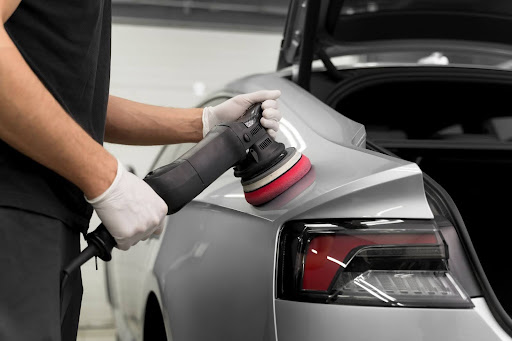
Use a dual-action (DA) polisher for safer work. Keep pads clean. Wipe residue often. Inspect under good light. Heat and pressure increase cut, but too much is risky. Respect edges and thin areas. Clear coat is finite.
When to choose polishing?
- You see swirls, haze, or light scratches.
- Water spots or oxidation dull the paint.
- You want the best base before protection.
- You plan to install PPF and need a defect-free surface.
What Buffing Is (And What It Is Not)
Buffing is the mechanical action of the pad on the paint. You use that action to spread and work a product: a compound, a polish, a glaze, a wax, or a sealant. In short, buffing is the technique. Polishing is the corrective result and also the product type.
Buffing appears at many stages. You buff a cutting compound to remove defects. You buff a finishing polish to refine gloss. You buff a wax or sealant to apply it evenly, then buff again to remove residue.
How does buffing work?
Buffing tools move a pad across the surface. The motion can be dual-action, rotary, or forced rotation. Pad choice matters. Foam pads range from heavy cut to ultra-soft. Microfiber pads cut fast but need clean-as-you-go care.
Good buffing is smooth and controlled. Keep the pad flat. Work small sections. Use slow arm speed. Wipe residue before it dries hard. Poor buffing can cause fresh swirls or holograms. Most of those come from dirty pads, too much pressure, or a rotary used without proper finish passes.
When to choose buffing?
- You need to work a product into the paint.
- You are spreading a wax or sealant for even coverage.
- You are finishing after a polishing step to raise clarity.
- You want a quick gloss boost on a well-kept car.
The Difference Between Polishing And Buffing
Aspect
Polishing
Buffing
Main purpose
Correction of defects
Application and working of products
What it changes
Clear coat level and texture
Product coverage and finish
Tools & materials
Abrasive polish and cut/refine pads
Compounds, polishes, waxes, sealants; various pads
Skill risk
Over-polishing thins clear coat
Poor technique can add swirls/holograms
Frequency
As needed; sparingly to preserve clear coat
More frequent; for maintenance and product use
Role in the car detailing process
Core part of automotive paint correction
Technique used during correction and protection
They are complementary. You often buff during polishing. But polishing is the corrective outcome. Buffing is the action that gets you there and also applies protection.
When and Why to Use Each

Follow these steps for clean, consistent results. These are practical car polishing techniques you can use today.
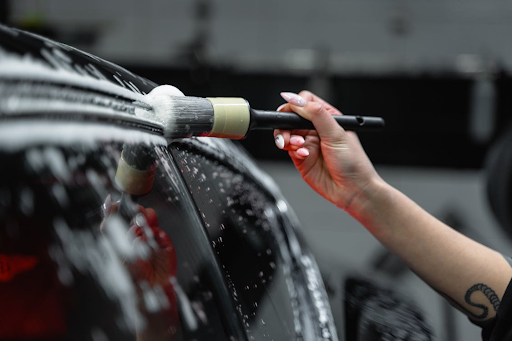
- Wash and decontaminate: Use a pH-balanced wash. Remove tar and iron fallout. Clay the paint if it feels rough.
- Inspect under good light: Mark heavy defects with tape. Avoid hot panels. Work indoors if you can.
- Measure if possible: If you have a gauge, check paint thickness. Be extra careful on edges and repainted parts.
- Test section first: Start with a fine polish and a polishing pad. Make 4–6 slow passes. Wipe and check. Only step up cut if needed.
- Choose the right pad: Use cutting pads for defects, polishing pads to refine, finishing pads for final gloss. Keep pads clean. Swap often.
- Set smart machine speed: On a DA, start mid speed for cut, lower it for finishing. Keep the pad flat. Use light to moderate pressure.
- Work small areas: About 40×40 cm at a time. Overlap passes by half a pad. Slow arm speed improves consistency.
- Manage residue: Wipe with quality microfiber before it dries. Clean pads with compressed air or a brush after each set.
- Refine your finish: After cutting, switch to a finishing polish and soft pad. Reduce speed and pressure. Aim for crisp reflections.
- Panel wipe: Use an IPA mix to remove oils. This shows the true finish and prepares for protection.
- Protect the result: Apply a sealant or wax if you want easy upkeep. For the strongest defense, choose PPF on high-impact zones like the front bumper, hood, and mirrors. You can also add tint to protect the interior from UV and heat.
Prefer to browse first? Explore our paint protection film (PPF) solutions and see how we keep paint looking new.
Common mistakes to avoid:
- Working dirty paint or pads.
- High pressure with a rotary on thin edges.
- Skipping a test spot.
- Chasing every mark on a thin panel.
- Rushing the wipe-down and sealing in residue.
Conclusion
Still unsure about polishing vs buffing? Here’s the clean split: polishing removes defects; buffing applies and perfects. Use polishing for true correction. Use buffing to spread and finish products with control. Then lock in the result with paint protection film (PPF) for long-term value.
Ready for a plan that fits your car and your routine? Contact Protector for quick advice and a custom protection setup.