Differences Between Polishing, Buffing, and Waxing
Quick question: are you fixing the paint, or just covering it up? Many drivers mix these steps without knowing it. The terms sound alike. The results are not. One smooths the clear coat. One is the motion that makes it happen. One shields what you’ve just restored. Miss the order and you waste time. Or worse, mark the paint.
This guide makes the differences between polishing, buffing, and waxing crystal clear. You’ll see what each one does, where it fits in a clean car detailing process, and how to avoid costly mistakes. We’ll also show where long-term care, like paint protection film (PPF), earns its place.
Ready to spot the myths, save your finish, and choose the right move for your car? Good. Let’s cut the noise and get this right.
What Is Polishing?
Polishing corrects the paint. It removes a very thin layer of the clear coat to level the surface. That is how you get rid of haze, light scratches, water spots, and swirl marks. Think of it as “sanding,” but very fine and controlled. Done right, polishing improves gloss and clarity and sets the surface up for protection.
Polishes contain abrasives. Some cut fast to correct heavier marks. Others are mild and refine the finish after a stronger step. This is why many detailers work in stages: cut, then refine, then finish. Each stage brings the clear coat closer to a flat, even surface that reflects light cleanly.
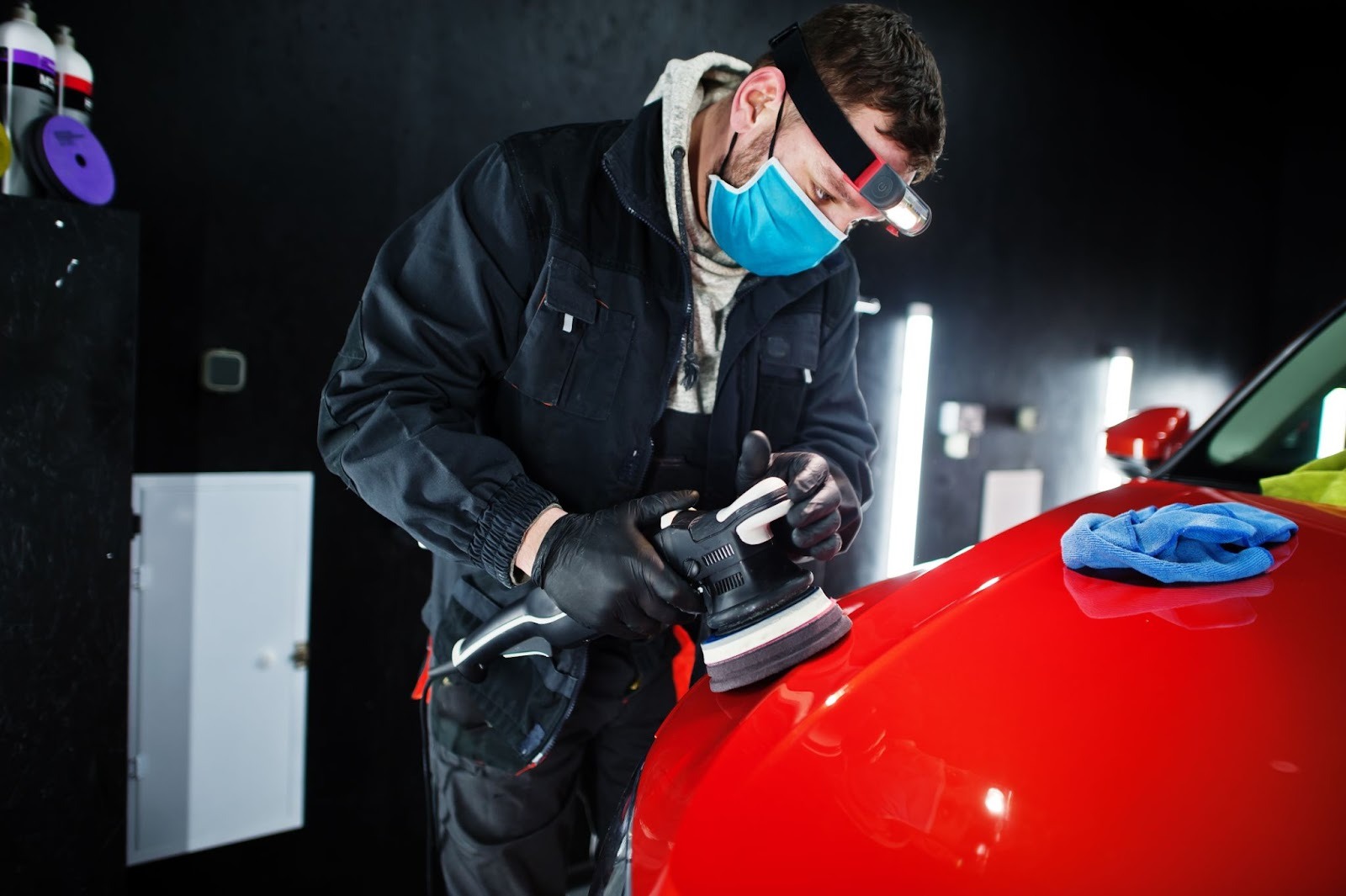
Polishing can be done by hand, but machines deliver even results. Dual-action (random orbital) tools are common because they are stable and reduce risk when you use proper pads and technique. Rotary tools correct faster but need skill. The goal is simple: remove the least paint needed to fix the defect. You should always polish before adding protection.
Car polishing vs buffing
People mix these terms a lot. In plain talk, polishing is the result you aim for: defect removal and a flat, glossy surface. Buffing is the action of working the pad and product on the paint to reach that result. More on buffing next.
What Is Buffing?
Buffing is the motion and method. You apply a compound or polish using a pad and a machine (or by hand) and work it over the paint. The tool, pad type, speed, pressure, and arm movement all matter. Keep the pad flat. Work small sections. Wipe clean. The aim is a uniform finish with no trails or haze.
Pads come in foam, microfiber, and wool. Wool and microfiber cut fast and suit heavy correction. Foam ranges from cutting to finishing and is common for refining. Match the pad to the task and the product. This keeps heat in check and reduces the risk of swirls.
Poor buffing can leave marks. Good buffing removes them. If you are new, choose a dual-action polisher and mild pad to stay safe while you learn. Control and patience win here. The goal is smooth, even paint that is ready for protection.
What Is Waxing?
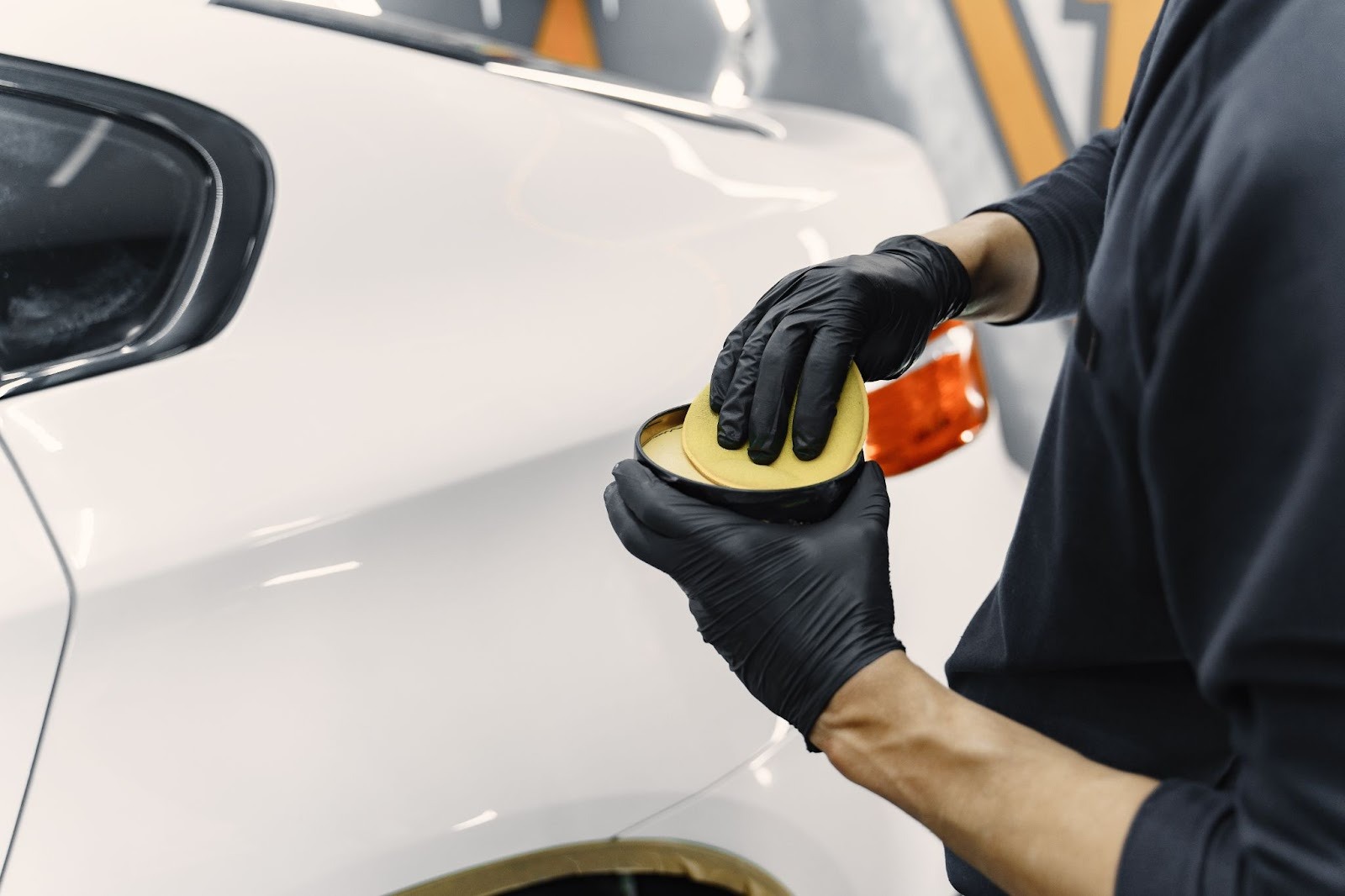
Waxing is protection. Wax adds a thin, sacrificial layer on top of the clear coat. It boosts gloss, helps water bead, and makes wash-downs easier. Traditional waxes often use carnauba, a natural ingredient that gives a warm shine.
There are two broad groups: natural waxes and synthetic sealants (often called polymer or synthetic waxes). Natural wax looks rich but wears faster. Sealants last longer and often hold up better to heat, sun, and harsh weather. Many drivers like a simple plan: polish as needed, then choose a sealant for longer life or a carnauba for that warm look, and reapply on a sensible schedule.
Wax does not fix defects. It hides tiny ones for a short time and shields the paint from UV, dirt, and fallout. Think of it as a raincoat for your clear coat. If the paint has swirls or scratches, polish first. Then wax to lock in the look and add protection.
For deeper, long-term protection against chips and marks, explore our solution for scratches on your car to see how paint protection film adds a stronger barrier beyond wax.
Differences Between Polishing, Buffing, And Waxing
Here is the plain split:
- Purpose
- Polishing: removes a tiny amount of clear coat to fix defects and restore gloss.
- Buffing: the action or technique used with a pad and product to do the correction.
- Waxing: adds a protective layer; it does not remove defects.
- Input & Tools
- Polishing: abrasive liquids and matching pads; often machine-driven.
- Buffing: motion, pressure, pad choice, and machine control.
- Waxing: protective products (natural or synthetic) applied by hand or machine.
- Outcome
- Polishing: clearer, flatter paint; higher true gloss.
- Buffing: delivers the polishing effect; quality depends on skill and setup.
- Waxing: slick feel, water beading, and easier washes; shine boost without cutting.
How These Three Steps Work Together
Here is a simple car detailing process that most cars benefit from:
- Correct with polishing where needed. Use the least aggressive step that fixes the defect.
- Buff with the right pad, speed, and pressure to apply and work the product evenly.
- Protect with wax or a sealant to lock in the look and guard the finish.
Wax gives short-to-medium term protection. Sealants generally last longer than natural wax. For the highest impact and durability, Automotive paint protection goes beyond wax. Paint protection film (PPF) is a clear urethane layer that helps guard against stone chips, scuffs, and road debris. It is the strongest shield you can put on high-impact zones like the bumper, hood edge, and mirrors. Many owners polish first, then protect with PPF for the long run.
If you want a trusted partner for this, meet Protector. With Protector, you have a team that focuses on real-world protection. Our window films block harmful UV. Our PPF shields against chips and scratches. You get a clean fit and a finish that looks like paint, not plastic. Explore our paint protection film (PPF) solutions today.
Conclusion
You now understand the differences between polishing, buffing, and waxing, and how the right order turns effort into lasting gloss. If you want protection that stands up to chips, grime, and sun, pair your fresh finish with PPF and window film from Protector.
Talk to a specialist who matches the plan to your car, your routes, and your budget. Ready to lock in that finish for the long run? Contact us and let’s set up the next step.